
.png)
ChatGPT vs. HIPAA-Compliant Dental AI: Which Tools Are Actually Safe in Your Practice?
- Kyle Summerford
- Mar 24
- 3 min read
Updated: Apr 2
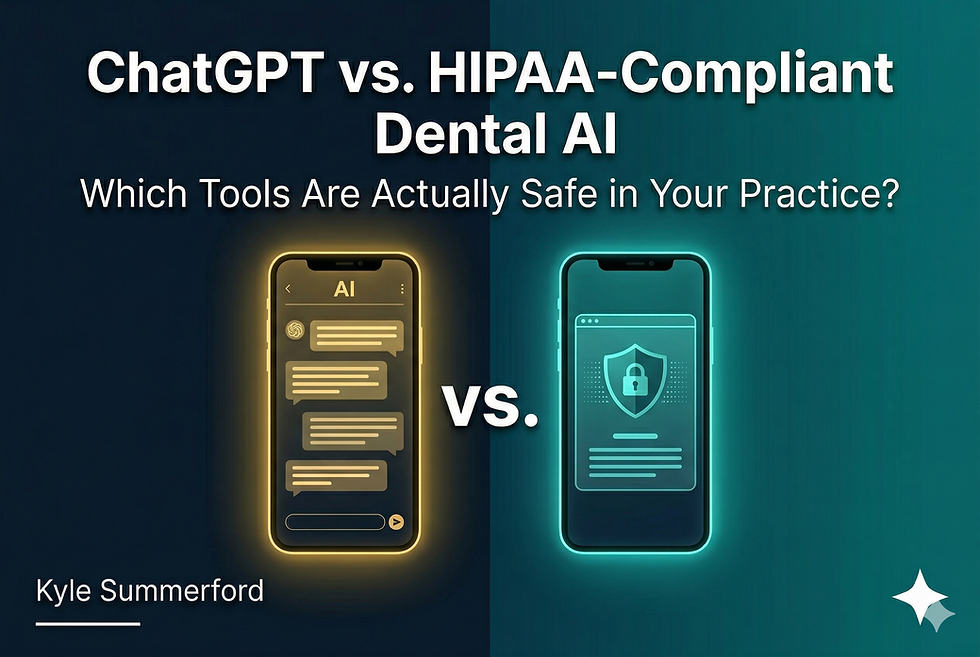
The dental AI market is flooded right now. General AI tools, dental-specific AI platforms, HIPAA-compliant systems, and everything in between. And most dental office managers are making decisions about which tools to use without a clear framework for understanding which category each one falls into.
That gap is where HIPAA violations happen. Not from bad intentions. From good people moving fast who didn't know the difference.
The Two Categories Every Dental Manager Needs to Understand
Category one: General AI tools. This includes ChatGPT, Claude, Gemini, Copilot, and most other consumer AI assistants. These tools are not built for healthcare. In their standard versions, they do not sign Business Associate Agreements. That means any patient-identifiable information you enter into them is potentially being transmitted to an unprotected third-party system, which is a HIPAA violation regardless of your intent.
Category two: HIPAA-compliant dental AI platforms. These are tools built specifically for dental or healthcare environments, with BAAs in place, encryption standards that meet federal requirements, and data handling policies designed around protected health information. Many of your existing dental software tools already have AI built in and are covered under your existing agreements.
So Does That Mean You Can't Use ChatGPT at All?
No. And this is the part most people miss. You can use general AI tools every single day to save hours of work, and never touch a HIPAA line, as long as you're not entering patient-identifiable information.
Writing patient communication templates? Safe, as long as you're not naming a specific patient. Drafting an HR policy? Completely fine. Preparing talking points for a team meeting? No issue. Summarizing best practices on insurance appeals? Go for it. The tool doesn't know it's in a dental office. You're the one deciding what goes in.
What Separates a Safe Prompt from a Dangerous One
Dangerous: "Write a follow-up message for Maria Garcia who missed her crown prep on March 10th and owes a $500 balance."
Safe: "Write a friendly follow-up message for a patient who missed their appointment and has an outstanding balance. Keep it warm and professional."
Same result. Same time savings. Zero PHI. That's the principle behind PHI-safe prompting, and it's the foundation that makes general AI tools usable in your practice without ever creating a compliance problem.
The Questions to Ask Before Adopting Any New AI Tool
Before any AI tool touches patient data in your practice, you need clear answers to three questions. First: Is there a signed BAA between your practice and this vendor? Second: Is the tool's data storage and transmission compliant with HIPAA security standards? Third: Does your team understand which information they can and cannot enter into this tool?
If you can't answer all three confidently, the tool is not ready for your practice, no matter how good the demo looked.
Your Team Is Your Biggest Variable
The most sophisticated HIPAA-compliant AI platform in the world doesn't protect you if your front desk coordinator is also using a personal ChatGPT account to answer patient questions and doesn't know the difference. Training your team on which tools are approved, what PHI is, and how to prompt safely is not optional. It's the policy layer that makes every other safeguard work.
This is exactly why PHI-safe prompting is the first module in the DOMA AI Certification. Before vendor evaluation, before implementation strategy, before anything else, every manager needs to be able to draw a clear line between what's safe and what isn't, and teach that line to their team. Learn more at DentalAIStandard.com.


Comments